Sled pull
The sled pull is an intermediate compound exercise for the lats, upper back and quads.
A conditioning exercise where you drag a weighted sled toward you by the rope, or walk backwards while pulling. It works your back, legs and grip hard without heavy impact.
- Main muscles
- Lats, Mid back, Quads
- Also works
- Biceps, Forearms and grip, Glutes, Lower back
- Equipment
- Other kit
- Level
- Intermediate
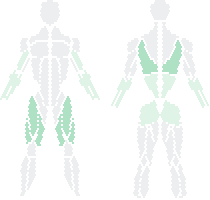
Muscles worked
The sled pull mainly works the lats, mid back and quads. It also works the biceps, forearms and grip, glutes and lower back.
More exercises for: lats, upper back, quads, biceps.
How to do it
- Stand facing the sled with the rope in both hands, your knees bent, your back flat and your feet a little wider than the hips.
- Brace your trunk and keep the chest up.
- Pull the rope in hand over hand, or walk backwards with straight arms, keeping the pull steady.
- Keep the stomach tight and the back flat as the sled moves toward you.
- Stop when the sled reaches you, reset, and go again.
Where you should feel it: In the lats, the upper back, the thighs and the grip, with a hard breathing effort. You should not feel it in the lower back.
Coach's cues
- Stand facing the sled with the rope in both hands, knees bent and the back flat
- Pull the rope in hand over hand, or walk backwards with straight arms
- Keep the stomach tight and the pull steady
Common mistakes
How to start. 4 pulls of 10 to 15 metres with a light load and 1 minute rest.
Who it suits
Suits intermediate trainees who want conditioning and back work without impact. Skip it if your lower back hurts when hinging, and use a lighter load or a different pull. Clear the area behind you when walking backwards.
Sets and reps by goal
- Conditioning: 4 to 6 pulls of 15 to 20 metres with moderate load and 60 to 90 seconds rest.
- Strength: 4 to 5 pulls of 10 metres with a heavy sled and 2 minutes rest.
- Warm-up: 2 pulls of 10 metres with a light load.
Easier and harder versions
- Sled push (harder): Pushing the sled is a leg-heavy, more intense option.
- Seated cable row (easier): The cable row works the same pull in a fixed, simpler setting.
- Ski erg (easier): The ski erg gives a low-impact pulling effort with easier pacing.
Load on your joints
How Amble rates this movement when it plans around sore joints.
Similar exercises
Guides that use it
Common questions
What muscles does the sled pull work?
The sled pull mainly works the lats, mid back and quads. It also works the biceps, forearms and grip, glutes and lower back.
How many sets and reps of the sled pull should I do?
Conditioning: 4 to 6 pulls of 15 to 20 metres with moderate load and 60 to 90 seconds rest. Strength: 4 to 5 pulls of 10 metres with a heavy sled and 2 minutes rest. Warm-up: 2 pulls of 10 metres with a light load.
What are the most common mistakes in the sled pull?
Rounding the back. Keep the chest up and hips low. Lighten the load if the back rounds. Jerking the rope. Pull steadily. Jerks waste effort and strain the back. Going too heavy. Pick a load you can move for the whole distance at a steady pace.
Amble puts sled pull in your week, at the right amount
Swap, move or skip an exercise in a couple of taps, or ask the coach to do it.