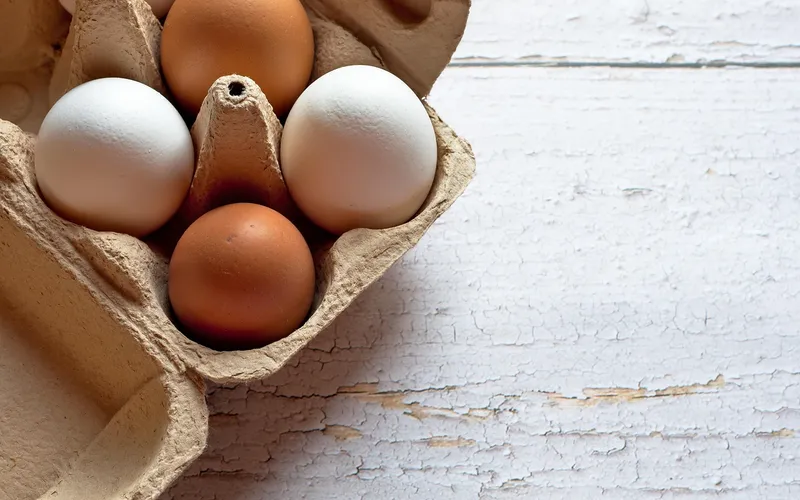
Foods with the most protein per 100 g are meat, fish and cheese, with nuts, seeds, lentils and beans the strongest plant sources. For everyday meals the easiest picks are chicken (about 30 g per 100 g cooked), tuna, white fish, eggs (about 6 to 7 g each), kvarg or skyr, cottage cheese and cooked lentils and beans (about 7 to 9 g per 100 g). The ranked tables below give exact values per 100 g and per 100 kcal from Livsmedelsverket's food database 1.
On this page
Ranked: the most protein per 100 g
Three tables from Livsmedelsverket's food database 1, the Swedish national food composition database: the foods with the most protein per 100 g, first animal foods and then plant foods, and the foods with the most protein for their calories. Each name links to the food's own page with the full nutrition. Values are for the food as listed in the database, raw unless the name says cooked. Powders, gelatine and dried foods are left out because they are not eaten 100 g at a time.
Meat, fish, eggs and dairy
| Food | Protein per 100 g | kcal per 100 g | Protein per 100 kcal |
|---|---|---|---|
| Boiled chicken breast | 34.6 g | 156 | 22.2 g |
| Boiled cod fillet | 30.3 g | 130 | 23.3 g |
| Roast beef | 25.5 g | 135 | 18.9 g |
| Minced beef, 10% | 25.0 g | 226 | 11.1 g |
| Cooked chicken | 23.3 g | 146 | 16.0 g |
| Chicken breast fillet | 23.1 g | 104 | 22.2 g |
| Halloumi, 22% | 22.3 g | 292 | 7.6 g |
| Salmon | 20.0 g | 203 | 9.9 g |
| Minced beef and pork | 18.8 g | 201 | 9.4 g |
| Boiled shrimp | 17.6 g | 77 | 22.9 g |
| Mackerel | 17.0 g | 290 | 5.9 g |
| Boiled egg | 12.1 g | 136 | 8.9 g |
| Quark, 0.2% | 10.0 g | 64 | 15.6 g |
| Falukorv sausage | 8.7 g | 267 | 3.3 g |
| Semi skimmed milk 1.5% | 3.6 g | 47 | 7.7 g |
Plant foods
Nuts, seeds and peanut butter top this list per 100 g, but they bring a lot of calories with it. Per 100 kcal, lentils, beans and chickpeas give more.
| Food | Protein per 100 g | kcal per 100 g | Protein per 100 kcal |
|---|---|---|---|
| Peanut butter | 22.6 g | 615 | 3.7 g |
| Sunflower seeds | 20.6 g | 618 | 3.3 g |
| Chia seeds | 19.4 g | 448 | 4.3 g |
| Walnuts | 13.8 g | 680 | 2.0 g |
| Boiled chickpeas | 8.1 g | 133 | 6.1 g |
| Brussels sprouts | 3.4 g | 44 | 7.7 g |
| Spinach | 3.3 g | 24 | 13.7 g |
| White cabbage | 1.2 g | 32 | 3.8 g |
| Beetroot | 1.2 g | 51 | 2.4 g |
| Cucumber | 0.8 g | 13 | 6.2 g |
| Tomato | 0.8 g | 18 | 4.4 g |
The most protein per 100 kcal
Foods with at least 10 g of protein per 100 g, ranked by how much protein each 100 kcal brings. These are the ones to reach for while you eat less.
| Food | Protein per 100 g | kcal per 100 g | Protein per 100 kcal |
|---|---|---|---|
| Boiled cod fillet | 30.3 g | 130 | 23.3 g |
| Boiled shrimp | 17.6 g | 77 | 22.9 g |
| Chicken breast fillet | 23.1 g | 104 | 22.2 g |
| Boiled chicken breast | 34.6 g | 156 | 22.2 g |
| Roast beef | 25.5 g | 135 | 18.9 g |
| Cooked chicken | 23.3 g | 146 | 16.0 g |
| Quark, 0.2% | 10.0 g | 64 | 15.6 g |
| Minced beef, 10% | 25.0 g | 226 | 11.1 g |
| Salmon | 20.0 g | 203 | 9.9 g |
| Minced beef and pork | 18.8 g | 201 | 9.4 g |
| Boiled egg | 12.1 g | 136 | 8.9 g |
| Halloumi, 22% | 22.3 g | 292 | 7.6 g |
Protein per portion
The ranked tables are per 100 g. The tables below are about what you actually eat: a typical portion and the protein in it.
Dairy and eggs
The workhorses of a Swedish fridge. Cheap, quick, and no cooking needed for most of them.
| Food | Protein per 100 g, about | A typical portion | Protein per portion, about |
|---|---|---|---|
| Kvarg, plain | 10 to 12 g | 200 g | 20 to 24 g |
| Keso (cottage cheese) | 12 g | 150 g | 18 g |
| Skyr, plain | 10 to 11 g | 150 g | 15 to 16 g |
| Eggs | 12 to 13 g | 2 eggs | 12 to 13 g |
| Hard cheese (hushållsost and similar) | 25 g | 2 thin slices, 20 g | 5 g |
| Milk | 3.5 g per 100 ml | a glass, 2 dl | 7 g |
| Filmjölk or plain yoghurt | 3 to 4 g | 2 dl | 6 to 8 g |
Kvarg is the standout. Plain kvarg has a lot of protein for its calories and works sweet (berries, a little honey) or savoury (with herbs as a dip). Flavoured versions often add sugar, so compare labels.
Meat, fish and seafood
| Food | Protein per 100 g, about | A typical portion | Protein per portion, about |
|---|---|---|---|
| Chicken breast, cooked | 30 g | 120 g | 36 g |
| Minced beef, raw | 18 to 20 g | 125 g raw | 23 to 25 g |
| Salmon, raw | 20 g | 125 g | 25 g |
| Cod or other white fish, raw | 17 to 18 g | 150 g | 26 g |
| Tuna, canned in water, drained | 25 g | half a can, about 60 g | 15 g |
| Prawns, peeled | 18 to 20 g | 100 g | 18 to 20 g |
| Sliced ham or turkey | 18 to 20 g | 3 slices, 30 g | 6 g |
Notice raw and cooked. Meat and fish lose water when cooked, so 100 g of cooked chicken has more protein than 100 g of raw. Make sure you compare like with like on labels and in apps.
Swedish dietary advice suggests more fish and less red and processed meat 2, so if you are choosing, lean towards fish, chicken and the plant foods below.
Beans, lentils and other plants
Plant foods usually have less protein per 100 g, but they come with fibre and are cheap. The Nordic recommendations favour a mainly plant-based diet that includes legumes 3.
| Food | Protein per 100 g, about | A typical portion | Protein per portion, about |
|---|---|---|---|
| Lentils, cooked | 8 to 9 g | 150 g | 12 to 13 g |
| Chickpeas, cooked | 7 to 8 g | 150 g | 11 to 12 g |
| Kidney or black beans, cooked | 8 g | 150 g | 12 g |
| Tofu, firm | 12 to 15 g | 150 g | 18 to 22 g |
| Edamame beans | 11 g | 100 g | 11 g |
| Oats, dry | 12 to 13 g | 40 g | 5 g |
| Peanut butter | 25 g | 1 tablespoon, 15 g | 4 g |
| Wholegrain bread | 9 g | 2 slices | 6 g |
Lentils and canned beans are some of the easiest additions to a meal you already make. Stir red lentils into a pasta sauce or a soup and they almost disappear. The guide to vegetarian protein has more ideas.
If you are losing weight
Some foods give you a lot of protein for few calories, which matters when you are eating less. Plain kvarg, keso, chicken breast, white fish, tuna in water, prawns and eggs are all good picks.
Others are high in protein but higher still in fat, like peanut butter, nuts and hard cheese. They are good food. Just treat them as extras, not as your main protein source for a meal.
Reading the label in ten seconds
- Find "Protein" in the nutrition table. Swedish labels list it per 100 g.
- Check whether the 100 g refers to the food as sold or as prepared.
- Multiply by your portion. A 250 g tub at 11 g per 100 g is about 27 g.
- Words on the front like "proteinrik" tell you little about your portion. The table on the back is what counts.
Building a meal from this list
Pick one item from the first two tables, or two from the plant table, for each meal. That alone gets most people to 20 to 40 g per meal, which is the range covered in protein per meal. To find your daily total, use the protein calculator or read how much protein you need. In Amble the weekly meal plan is written to your protein target, and a protein line on the food screen shows how far you are through the day.
Questions
Which food has the most protein per 100 g?
Among foods eaten as they are, meat, fish and hard cheese come out on top, at roughly 25 to 35 g per 100 g; the first table on this page ranks them. Powders and dried foods are left out, because nobody eats 100 g of them.
Which foods give the most protein for the fewest calories?
Lean white fish, prawns, chicken breast, tuna in water and low-fat quark. The table of protein per 100 kcal ranks them; those foods matter most when you are eating less to lose weight.
What are the best plant foods for protein?
Lentils, beans, chickpeas, tofu, nuts and seeds. The plant table ranks them per 100 g, and the guide to vegetarian protein shows how to combine them.
How much protein do I need a day?
For most people who exercise, 1.4 to 2.0 g per kg of body weight a day, spread over meals with about 20 to 40 g each 4. The protein calculator gives your own number.
Sources
- Livsmedelsverket. Livsmedelsdatabasen, the Swedish food composition database. Accessed 23 October 2026.
- Livsmedelsverket. Kostråd (dietary advice). Accessed 23 October 2026.
- Blomhoff R, Andersen R, Arnesen EK, Christensen JJ, Eneroth H, Erkkola M et al.. Nordic Nutrition Recommendations 2023. Nordic Council of Ministers, 2023. doi:10.6027/nord2023-003
- Jäger R, Kerksick CM, Campbell BI, Cribb PJ, Wells SD, Skwiat TM et al.. International Society of Sports Nutrition Position Stand: protein and exercise. Journal of the International Society of Sports Nutrition, 2017;14(1). doi:10.1186/s12970-017-0177-8 · PubMed