Suitcase carry
The suitcase carry is a beginner dumbbell compound exercise for the obliques and forearms.
A one-handed carry that makes your trunk resist leaning to the loaded side. It builds grip, obliques and posture with the simplest of setups.
- Main muscles
- Obliques, Forearms and grip
- Also works
- Upper traps, Side glutes, Abs
- Equipment
- Dumbbells
- Level
- Beginner, one side at a time
Muscles worked
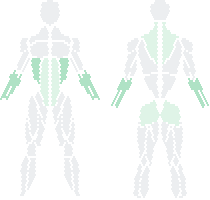
The suitcase carry mainly works the obliques and forearms and grip. It also works the upper traps, side glutes and abs.
More exercises for: obliques, forearms, upper back, glutes.
How to do it
- Stand tall with one heavy dumbbell or kettlebell at your side, like a suitcase, with the other arm relaxed.
- Stand tall with the shoulders level and the ribs down.
- Walk with short, steady steps without leaning toward the weight.
- Breathe normally and keep the free hand from reaching out for balance.
- Switch hands after each stretch, and carry the same distance on both sides.
Where you should feel it: In the side of the trunk opposite the weight, the grip and the upper traps. You should not feel it in the lower back or have the shoulder dragged down.
Coach's cues
- Hold one heavy dumbbell at the side, like a suitcase
- Walk with short steps and stand tall without leaning to either side
- Switch hands after each stretch
Common mistakes
How to start. 3 carries of 20 metres per side with a moderately heavy weight.
Who it suits
Suits beginners and advanced lifters, since it is simple and scalable. Pick a weight you can carry without leaning. Skip it if grip or back pain is a problem, and keep the load lower.
Sets and reps by goal
- Strength: 3 to 4 carries of 20 to 30 metres per side with a heavy weight.
- Core stability: 3 carries of 30 to 40 seconds per side with a moderate weight.
- Endurance: 2 to 3 carries of 40 to 60 seconds per side with a lighter weight.
Easier and harder versions
- Farmer's walk (harder): The farmer's walk carries a weight in each hand and allows more load.
- Plate pinch hold (easier): The plate pinch trains the grip alone, standing still.
- Copenhagen plank (harder): The Copenhagen plank trains the side of the trunk and the inner thigh with more difficulty.
Load on your joints
How Amble rates this movement when it plans around sore joints.
Similar exercises
Guides that use it
Common questions
What muscles does the suitcase carry work?
The suitcase carry mainly works the obliques and forearms and grip. It also works the upper traps, side glutes and abs.
How many sets and reps of the suitcase carry should I do?
Strength: 3 to 4 carries of 20 to 30 metres per side with a heavy weight. Core stability: 3 carries of 30 to 40 seconds per side with a moderate weight. Endurance: 2 to 3 carries of 40 to 60 seconds per side with a lighter weight.
What are the most common mistakes in the suitcase carry?
Leaning to one side. Stay tall and level. If you lean, the weight is too heavy. Shrugging or hiking the hip. Keep the shoulders and hips level while you walk. Walking too fast. Take smooth, short steps. Fast steps make the weight swing.
Amble puts suitcase carry in your week, with the right weight
Under each exercise Amble shows what to lift next time, with the reason.