Alternating dumbbell curl
The alternating dumbbell curl is a beginner dumbbell isolation exercise for the biceps.
A curl where you lift one dumbbell at a time, which trains the biceps and the muscles beside them. Doing one arm at a time makes it easier to focus and to keep both arms even.
- Main muscles
- Biceps
- Also works
- Brachialis and brachioradialis, Forearms and grip
- Equipment
- Dumbbells
- Level
- Beginner, one side at a time
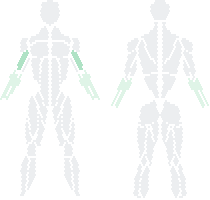
Muscles worked
The alternating dumbbell curl mainly works the biceps. It also works the brachialis and brachioradialis and forearms and grip.
How to do it
- Stand tall with a dumbbell in each hand at your sides, palms facing forward, feet about hip width apart.
- Keep your elbows close to your ribs and curl one dumbbell up towards the shoulder.
- Squeeze at the top for a moment without swinging the body.
- Lower the dumbbell slowly until the arm is straight, then curl the other arm.
- Breathe out as you lift and in as you lower.
Where you should feel it: You should feel the front of the upper arm work, with some effort in the forearm. It should not feel like the lower back or shoulder doing the lifting.
Coach's cues
- Stand tall with the dumbbells at your sides, palms forward
- Curl one arm at a time and keep the elbow close to the body
- Lower slowly before the other arm starts
Common mistakes
How to start. Start with 2 to 3 sets of 8 to 12 reps per arm with a light pair, where the last 2 reps feel hard but clean.
Who it suits
It suits nearly everyone, beginners included. Use lighter weights if your elbows or wrists complain, and stop if you feel sharp pain at the front of the elbow. Sit down if balance is an issue.
Sets and reps by goal
- Muscle: 3 sets of 8 to 12 reps per arm, 60 to 90 seconds rest.
- Strength: 3 to 4 sets of 5 to 8 reps with heavier weights and strict form.
- Endurance: 2 to 3 sets of 15 to 20 reps with lighter weights.
Easier and harder versions
- Seated dumbbell curl (easier): Sitting takes away the swing and makes strict form easier.
- Dumbbell biceps curl (easier): Curling both arms together is quicker and uses the same movement.
- Incline dumbbell curl (harder): The incline bench stretches the biceps more at the bottom.
- Zottman curl (harder): The Zottman adds a reverse-grip lowering phase for the forearms.
Load on your joints
How Amble rates this movement when it plans around sore joints.
Instead of the alternating dumbbell curl
The same main muscles with different kit or a lower difficulty.
Similar exercises
Guides that use it
Common questions
What muscles does the alternating dumbbell curl work?
The alternating dumbbell curl mainly works the biceps. It also works the brachialis and brachioradialis and forearms and grip.
How many sets and reps of the alternating dumbbell curl should I do?
Muscle: 3 sets of 8 to 12 reps per arm, 60 to 90 seconds rest. Strength: 3 to 4 sets of 5 to 8 reps with heavier weights and strict form. Endurance: 2 to 3 sets of 15 to 20 reps with lighter weights.
What can I do instead of the alternating dumbbell curl?
EZ-bar curl, cable curl and machine biceps curl work the same main muscles.
What are the most common mistakes in the alternating dumbbell curl?
Swinging the body. Use a lighter weight and keep your back still. Squeeze the glutes if you tend to lean back. Elbows drifting forward. Keep the elbow by your side so the biceps do the work instead of the shoulder. Dropping the weight fast. Take about 2 to 3 seconds on the way down. The lowering part builds strength too.
Amble puts alternating dumbbell curl in your week, with the right weight
Under each exercise Amble shows what to lift next time, with the reason.