Pigeon stretch
The pigeon stretch is a beginner bodyweight stretch for the glutes.
A deep hip stretch that opens the glutes and the outer hip. It is useful after running, long sitting or lower-body days, when the hips feel tight.
- Main muscles
- Glutes
- Also works
- Hip flexors
- Equipment
- Bodyweight
- Level
- Beginner, one side at a time
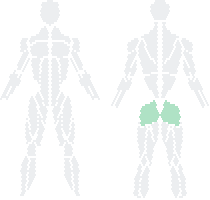
Muscles worked
The pigeon stretch mainly works the glutes. It also works the hip flexors.
More exercises for: glutes.
How to do it
- Start on hands and knees, slide one knee forward behind the same-side wrist and lay that lower leg across in front of you.
- Slide the other leg straight back along the floor and square your hips toward the ground.
- Lower your hips slowly and keep your chest tall, with your hands on the floor beside you.
- Fold forward over the front leg only if the stretch stays in the glute.
- Hold and breathe slowly, then switch sides.
Where you should feel it: A deep stretch in the glute and outer hip of the front leg, and a lighter stretch at the front of the back hip. You should not feel any pinch or pulling in the knee.
Coach's cues
- From hands and knees, bring one knee forward and lay the lower leg across in front of you
- Slide the other leg straight back and lower the hips
- Stay where the stretch is felt in the glute, never in the knee
Common mistakes
How to start. Hold 30 seconds per side, once or twice, and place a cushion under the front hip if it does not reach the floor.
Who it suits
Suits runners, lifters and anyone with tight hips. Skip it or use a gentler stretch like the figure-four if your knee or hip feels pinched. It is a stretch, not a test of flexibility, so ease in.
Sets and reps by goal
- Mobility: hold 30 to 60 seconds per side, 2 to 3 times, after training or in the evening.
- Warm-up: skip long holds and use 10 to 20 seconds per side before lifting.
- Recovery: 1 to 2 holds of 45 seconds per side after leg days.
Easier and harder versions
- Figure-four glute stretch (easier): The figure-four stretch is done on your back and is gentler on the knees.
- 90/90 hip stretch (easier): The 90/90 stretch is seated and lets you control the depth.
- Seated glute stretch (easier): A seated glute stretch is a simple option when kneeling is uncomfortable.
Load on your joints
How Amble rates this movement when it plans around sore joints.
Similar exercises
Guides that use it
Common questions
What muscles does the pigeon stretch work?
The pigeon stretch mainly works the glutes. It also works the hip flexors.
How many sets and reps of the pigeon stretch should I do?
Mobility: hold 30 to 60 seconds per side, 2 to 3 times, after training or in the evening. Warm-up: skip long holds and use 10 to 20 seconds per side before lifting. Recovery: 1 to 2 holds of 45 seconds per side after leg days.
What are the most common mistakes in the pigeon stretch?
Feeling it in the knee. Bring the front foot closer to your body or place a cushion under the hip. Stop if the knee hurts. Collapsing onto one hip. Prop the hip up with a folded towel so your hips stay level and the stretch stays in the glute. Holding your breath. Breathe slowly and soften into the stretch rather than forcing it.
Amble puts pigeon stretch in your week, at the right amount
Swap, move or skip an exercise in a couple of taps, or ask the coach to do it.