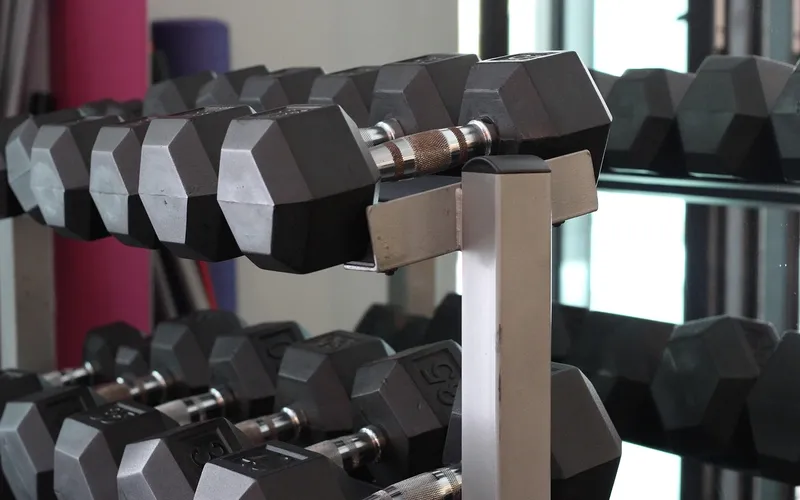
A 2017 meta-analysis of 21 studies found that muscle growth was similar with light and heavy loads when sets were taken to failure. Strength in the one-rep max was greater with heavy loads1.
On this page
What was studied
Schoenfeld, Grgic, Ogborn and Krieger published a systematic review and meta-analysis in the Journal of Strength and Conditioning Research in 2017. They asked a simple question. Does it matter whether you lift a light weight for many reps or a heavy weight for few, if the goal is muscle size or strength1?
The studies had to compare low-load training (60% of the one-rep max or less) with high-load training (above 60%). Every set had to be taken to momentary failure, the training had to last at least 6 weeks, and the participants had no known medical conditions or injuries that limited training. In total, 21 studies met these rules1.
What it found
- Gains in one-rep max strength were significantly greater with heavy loads.
- Gains in isometric strength (pushing against something that does not move) did not differ significantly.
- Changes in muscle size were similar between light and heavy loads1.
The authors concluded that the biggest strength benefit comes from heavy loads, while muscle growth can be reached across a wide range of loads1.
What it does not tell you
- Every set in these studies went to failure. That is how the light-load groups made up for the lighter weight. It does not show that light sets stopped well short of failure would grow muscle just as well. See our summary of the failure meta-analysis for that question.
- Strength here means the one-rep max, which is the lift the heavy groups practised. Part of the gap may be practice with heavy weights.
- The studies were at least 6 weeks long. The summary we have says nothing about longer periods, or about different age groups.
- Light sets to failure are hard work, and many people find them unpleasant. How a program feels was not what the review measured.
What it means if you train
For muscle size, you have room to choose. If your joints prefer lighter weights, or you only have dumbbells at home, light work can build muscle when the sets are hard. If you want to get stronger at a lift, spend some of your time with heavier weights too.
The 2026 ACSM position stand points the same way: heavier loads, about 80 percent of your one-rep max for 2 to 3 sets, for strength, and around 10 sets per muscle group a week for muscle growth2.
A practical way to use both: do the main lifts in a heavier range, and finish with lighter exercises for more reps.
If you have a health condition or an injury, ask your doctor or physiotherapist what load is right for you before you go heavy.
How Amble uses it
Amble does not push everyone to one rep range. On strength-focused days the main lift gets heavier, lower-rep sets, and on muscle-focused days the reps are a little higher.
Summary written by Amble from the published paper. Read the original for full methods and results.
Sources
- Schoenfeld BJ, Grgic J, Ogborn D, Krieger JW. Strength and Hypertrophy Adaptations Between Low- vs. High-Load Resistance Training: A Systematic Review and Meta-analysis. Journal of Strength and Conditioning Research, 2017;31(12):3508-3523. doi:10.1519/JSC.0000000000002200 · PubMed
- American College of Sports Medicine. Resistance Training Prescription for Muscle Function, Hypertrophy, and Physical Performance in Healthy Adults: An Overview of Reviews. Medicine and Science in Sports and Exercise, 2026. acsm.org/resistance-training-guidelines-update-2026