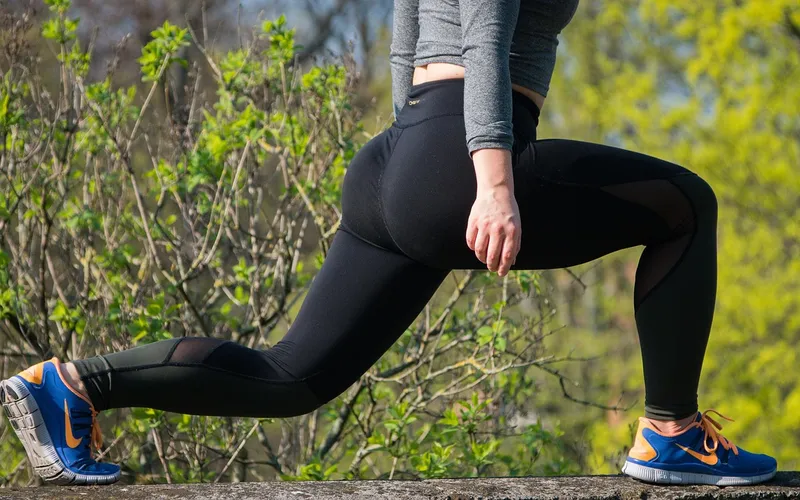
Strength training around and after menopause has good evidence for two things: stronger muscles, and better bone density at the spine and hip when the training is heavy enough and supervised. For hot flushes, sleep, mood and weight, the sources on this page do not give an answer.
On this page
What the evidence supports, and what it does not
| Question | What our sources say | How confident |
|---|---|---|
| Does it build strength in women over 50? | Yes. Resistance training clearly increased strength in adults over 50 | Good |
| Does it help bone density after menopause? | In one trial, heavy supervised training improved spine and hip bone density in women with low bone mass | Promising, from one trial |
| Is it safe? | Safe and effective for older adults when well instructed and progressed | Good |
| Does it ease hot flushes? | Not covered by our sources | Unknown here |
| Does it help sleep or mood in menopause? | Not covered by our sources | Unknown here |
| Does it prevent weight gain in menopause? | Not covered by our sources | Unknown here |
We would rather tell you plainly that the evidence on this page is thin for symptoms than borrow claims from studies we have not checked. If you have read that lifting fixes hot flushes or belly fat, it may or may not be true. It is not something we can back up here.
Bone: the strongest reason
The best evidence comes from the LIFTMOR trial. 101 postmenopausal women with low bone mass did 8 months of supervised training twice a week: heavy resistance exercises plus impact work. Bone density at the spine and hip improved compared with a low-intensity home programme, and there were no serious training injuries 1.
Three details from that trial are worth noticing.
It was heavy. The comparison was with a low-intensity home programme, and the high-intensity group did better. That does not show light exercise does nothing for bone, but it is a reason not to stay light forever.
It was supervised. The training was done under supervision. That is likely a big part of why heavy training went without serious injuries in women who already had low bone density.
It was one trial. A good one, but one. It is a reason to take heavy training seriously, not proof that it works for everyone.
Strength: well supported
Here the evidence is broad. A meta-analysis of resistance training in adults over 50 found that training clearly increased strength, and higher-intensity training gave larger gains 2. The NSCA says resistance training is safe and effective for older adults, including frail people, when it is well instructed and progressed gradually 3.
The ACSM's 2026 position stand, from 137 systematic reviews, found the biggest gain comes from going from no resistance training to any 4. If you do none today, that is where most of the benefit lies.
How to train with that in mind
Build up towards heavier training over a few months.
- Months 1 to 2: learn the movements. Two sessions a week, 2 to 3 sets of 8 to 12 at a weight you could lift a few more times. Leg press or goblet squat, seated cable row, a chest press, a glute bridge, step-ups.
- Months 3 to 4: go heavier on a few lifts. On two or three stable exercises, work towards weights you can lift about 5 to 8 times. The ACSM's strength recommendation is loads around 80 percent of your one-rep max for 2 to 3 sets 4.
- Add carrying and impact if your doctor agrees. Farmer's walks load the whole body. Impact work like small jumps or heel drops was part of LIFTMOR, but it is not right for everyone with low bone density, so ask first.
The WHO asks adults to strength train all major muscle groups on two or more days a week 5. That is the minimum to aim for.
If you already have a diagnosis of low bone density, strength training for osteoporosis goes into exercise choice in more detail.
Getting help with form
If heavy lifting is the goal, a few sessions with a qualified trainer or physiotherapist who works with women over 50 are worth more than any app. They can check your form on the main lifts and tell you which movements suit your spine and joints.
How heavy should you lift explains reps in reserve and how to add weight in small steps. Strength training after 40 has a full weekly plan.
What we will add
We will update this page if we add sources that look at menopause symptoms directly. Until then, the honest summary is: lift for strength and bone, and treat any other promise with care.
Questions
Will strength training stop menopause weight gain?
None of the sources we use test that directly, so we cannot say. Strength training builds muscle and strength; what happens to body weight depends mostly on food and overall activity.
I have osteoporosis. Is heavy lifting safe?
In one trial, women with low bone mass did supervised heavy training with no serious injuries 1. That was supervised. Ask your doctor or a physiotherapist before you start, and get coaching on form.
Sources
- Watson SL, Weeks BK, Weis LJ, Harding AT, Horan SA, Beck BR. High-Intensity Resistance and Impact Training Improves Bone Mineral Density and Physical Function in Postmenopausal Women With Osteopenia and Osteoporosis: The LIFTMOR Randomized Controlled Trial. Journal of Bone and Mineral Research, 2018;33(2):211-220. doi:10.1002/jbmr.3284 · PubMed
- Peterson MD, Rhea MR, Sen A, Gordon PM. Resistance exercise for muscular strength in older adults: A meta-analysis. Ageing Research Reviews, 2010;9(3):226-237. doi:10.1016/j.arr.2010.03.004 · PubMed
- Fragala MS, Cadore EL, Dorgo S, Izquierdo M, Kraemer WJ, Peterson MD et al.. Resistance Training for Older Adults: Position Statement From the National Strength and Conditioning Association. Journal of Strength and Conditioning Research, 2019;33(8):2019-2052. doi:10.1519/JSC.0000000000003230 · PubMed
- American College of Sports Medicine. Resistance Training Prescription for Muscle Function, Hypertrophy, and Physical Performance in Healthy Adults: An Overview of Reviews. Medicine and Science in Sports and Exercise, 2026. acsm.org/resistance-training-guidelines-update-2026
- Bull FC, Al-Ansari SS, Biddle S, Borodulin K, Buman MP, Cardon G et al.. World Health Organization 2020 guidelines on physical activity and sedentary behaviour. British Journal of Sports Medicine, 2020;54(24):1451-1462. doi:10.1136/bjsports-2020-102955 · PubMed